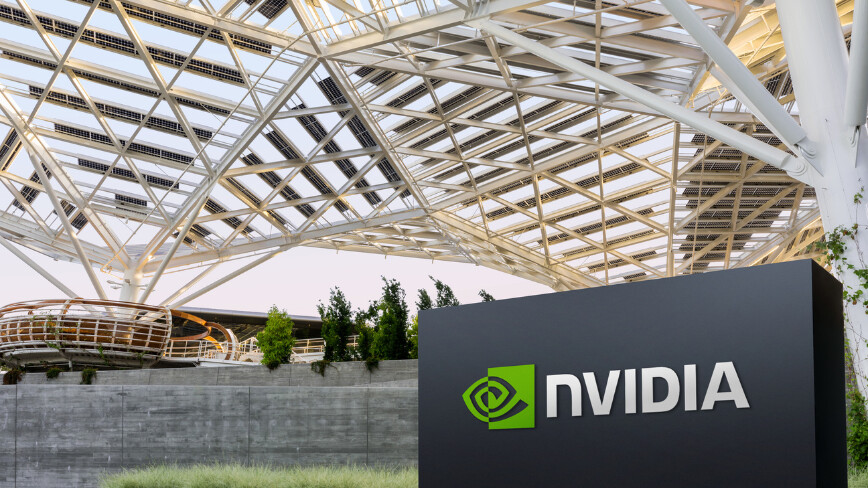
Nvidia has become shorthand for the AI market itself. In the years since generative models reshaped computing, the company’s GPUs have powered everything from large-scale training clusters to real-time inference infrastructure.
That dominance helped Nvidia’s stock surge over 1,500 percent from 2022 into 2025 and made it one of the most valuable tech firms in history.
Yet as its newest earnings report approaches, investors aren’t just asking whether revenue is growing, they’re asking whether the AI boom still has room to run.
Scaling AI isn’t just about silicon anymore
Analysts expect Nvidia to post another blockbuster quarter, with revenue forecasts between roughly $65 billion and $66 billion and adjusted gross margins near 75 percent.
That kind of performance would mark continued strength in demand for high-end AI accelerators, particularly from cloud providers and hyperscalers that underpin much of the industry’s infrastructure.
On the surface, those numbers look almost routine at this point, after all, Nvidia has beaten estimates for revenue and earnings for more than a dozen straight quarters. But markets have shifted, and so has investor psychology.
The question now isn’t just “how much growth?”, but “for how long?” and “toward what?”
One reason for that shift is the growing push by major AI users to develop or adopt alternatives to Nvidia’s hardware.
Meta, Google and other hyperscalers are investing heavily in custom silicon or alternative accelerators designed to cut costs, optimize specific workloads, or gain strategic independence from Nvidia’s ecosystem.
Those moves don’t immediately undercut Nvidia’s sales, but they signal a longer-term competitive environment that didn’t exist a few years ago.
This isn’t entirely new, the chip industry has always been cyclic and competitive, but it matters more now because so much of global AI infrastructure hangs off a single architecture. When customers start hedging that exposure, it naturally ripples through valuations and strategic forecasts.
Investor expectations are part of the story
Another reason this earnings cycle feels different is the backdrop in broader markets. AI names have led the rally in tech stocks, but sentiment has softened.
Over the first weeks of 2026, Nvidia’s share price has barely budged compared with steep gains in previous years, even as other industries waver under economic uncertainty.
Some analysts read this as a sign that markets are increasingly focused on profitability timelines and real-world deployment metrics rather than narrative alone.
Part of that recalibration reflects broader anxiety about what some observers call an “AI bubble,” where valuations in the sector may be disconnected from underlying economic fundamentals.
Whether or not that label is fair, it reflects genuine investor nervousness about sustainability, return on investment, and how soon large companies will convert AI hype into consistent revenue growth.
What Nvidia can and must deliver
For Nvidia, this means earnings won’t be judged simply on topline figures. The market will be listening closely to a few specific signals:
- Demand trajectory from hyperscalers and cloud providers. Are capex cycles still accelerating, or showing signs of plateauing?
- Guidance on future quarters. Vague or cautious outlooks could spook markets that have priced high growth into Nvidia’s valuation.
- Comments on competitive strategy, particularly around partnerships, software ecosystems, and how the company plans to respond to custom silicon trends.
- Supply chain and geopolitical risks, including memory pricing and export restrictions that affect where Nvidiacan sell its most advanced chips.
A strong earnings beat with confident guidance could reassure markets that AI spending isn’t slowing and that Nvidia remains the core engine of that demand. A modest beat or mixed signals, however, might validate some of the more cautious narratives and lead to broader tech sell-offs.
Nvidia’s report matters because it has become the default bellwether for AI infrastructure spending, and by extension, for how investors value growth in technology sectors.
If the company shows that demand and pricing power remain robust, it supports a broader bull case for AI adoption. If not, we may see a re-rating of AI as an investment theme, with implications far beyond one company’s earnings call.
In that sense, this quarter isn’t just about chips or quarterly revenue. It’s about confidence: in AI’s staying power, in enterprise capex cycles, and in the narrative that has driven one of the most remarkable growth stories in recent market history.
You can find the financial report here.
Get the TNW newsletter
Get the most important tech news in your inbox each week.