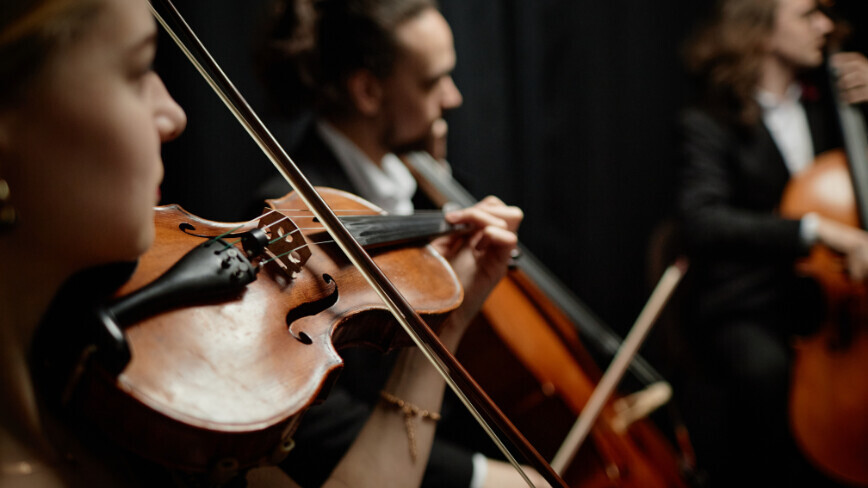
In October 2021, the Beethoven Orchestra Bonn interpreted the first movement of Beethoven’s 10th unfinished symphony, which was completed with the use of artificial intelligence.
A team of computer scientists, music historians, musicologists, and composers developed the ‘Beethoven AI’ to analyze Beethoven’s music style and life, using the sketches he left behind of the 10th symphony, plus works from other composers that had a notable influence on his life, such as Johann Sebastian Bach, to generate pieces that reflect what he would have composed.
Beethoven AI, as others AI composition programs, produces music in the same way ChatGPT produces outcomes. It uses machine learning and algorithms to analyse musical data and patterns, and generative models to produce music based on inputted prompts.
Hence, the AI tool was trained by the team of experts and provided with all the necessary information for it to understand, be contextualized, and finally, be able to create something that Beethoven himself could have written.
This milestone raises an important question that becomes more relevant day by day: as technology becomes increasingly capable of initiating creativity, what remains distinctly human in the classical music world?

The 💜 of EU tech
The latest rumblings from the EU tech scene, a story from our wise ol' founder Boris, and some questionable AI art. It's free, every week, in your inbox. Sign up now!
Can AI replace the sensitivity and humanity needed to compose, interpret, convey the emotions, or communicate the composer’s intended message?
Classical Music Evolution
Classical music has historically been a niche domain. It was born in the house of Jesus as the natural successor after choral music.
Whatsoever, only the most privileged ones, those of noble background or family with ties to music, could dedicate their lives to the study of an instrument or composition, and only those part of the aristocracy had the privilege to enjoy it.
Over time and thanks to globalization and the massive spread of information, classical music has expanded, allowing millions of people around the world to be delighted by it.
Digital platforms like Spotify and YouTube offer all audiences the opportunity to access an immense variety of compositions and recordings across history, democratizing classical music.
Simultaneously, social media allows traditional or innovative artists to showcase their interpretation of it, whether it is a classical performance of Campanella by Paganini or a modern version of The Four Seasons by Vivaldi, played as a trap variation.
Technology and AI in the Classical Music industry
The introduction of modern technologies has represented an opportunity for the classical music industry to find innovative ways to remain relevant in a fast-paced world.
The Berlin Philharmonic Orchestra has launched a digital concert hall, a streaming platform for users to access multiple recordings and content on demand. Similarly, the Philharmonia Orchestra uses Virtual Reality to create an immersive experience, allowing the audience to enjoy the concerts onstage, among the players.
However, the new technologies also symbolize a challenge and introduce concerns about the future of human creativity for the creative industries, including the classical music world.
AyseDeniz Gokcin, a Turkish pianist, uses AI to arrange pieces from iconic composers, adapting them to modern trends or to what they might have produced if they lived today, which risks displacing contemporary composers trying to establish their own voices.
AI: Ally and Threat
From a symphony finished with AI, to the experience of listening to an orchestra being onstage with them, or to have the possibility of listening to your favorite composer in a modern, personalized style, technology brings clear advantages to the classical music industry.
A study in ‘Music Composition with AI’ made by the World Journal of Advanced Research and Reviews (WJARR) highlights how AI technologies can improve efficiency and accessibility, preserve and enhance historical pieces, and unlock new possibilities for innovation in performance and education. Y
et, it also challenges the role of human artistry and raises concerns about the lack of emotional depth, ethical and legal issues, and the livelihoods of today’s musicians and composers.
AI can be a powerful tool and ally for those who are willing to work with it as an extension of human creativity and as a means to explore new ways of expressing themselves.
While those who see it as a threat can focus on seeing AI as a digital instrument that will never replace the touch of mankind, since it depends on artists to create, replicate, and generate outcomes.
Lastly, it is on us, creators and audiences, to make a conscious choice in how we use new technologies and to preserve humanity in a rapidly evolving world.
Get the TNW newsletter
Get the most important tech news in your inbox each week.