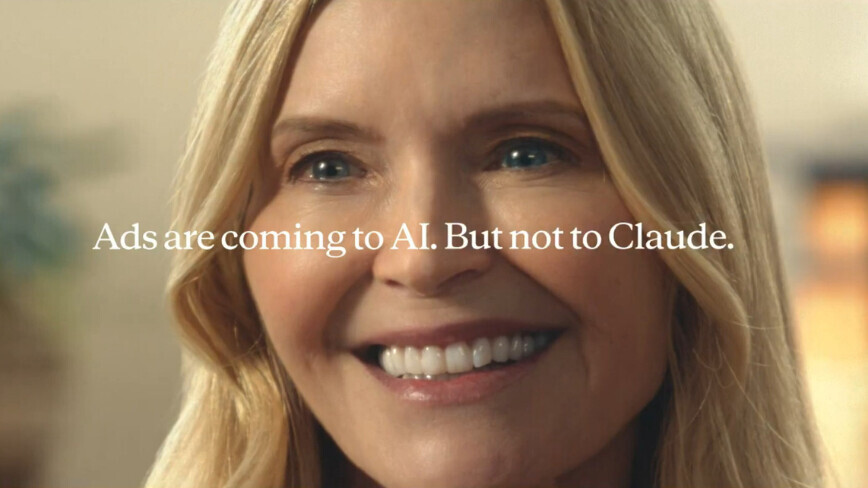
Everyone knows Super Bowl commercials are expensive, bombastic, and designed to be talked about. What we didn’texpect was an AI startup using the biggest ad stage of the year to throw shade at a rival’s advertising strategy.
That’s exactly what Anthropic has done. The company bought Super Bowl airtime to broadcast a simple message: “Ads are coming to AI, but not to Claude.” Its ads depict a chatbot spitting product pitches mid-conversation, ending with a clear contrast to its own ad-free promise.
Even ads these days aren’t what they used to be.
Video: Can I get a six pack quickly?, uploaded by Anthropic and Claude on YouTube

The 💜 of EU tech
The latest rumblings from the EU tech scene, a story from our wise ol' founder Boris, and some questionable AI art. It's free, every week, in your inbox. Sign up now!
On paper, it’s witty positioning. In practice, it’s a symbolic escalation of the AI narrative war, from technical features and safety debate to brand virtue signaling.
The feud isn’t about tech, it’s about identity
Here’s the setup: OpenAI, facing towering infrastructure costs and financial pressure, has signalled a shift toward ads in ChatGPT’s free and lower-cost tiers, saying they’ll be clearly labelled and won’t influence the assistant’s output.
Anthropic has seized on this to frame itself as the principled alternative, a chatbot that will remain ad-free. I will save these ads in case we need to for the future.
But let’s unpack that.
Ads in any product that’s expensive to operate are a practical monetization strategy, not a nightmare scenario. OpenAI’s plan doesn’t involve bots randomly pitching breakfast cereal mid-answer. That exaggerated depiction belongs in satire, not an accurate product comparison.
OpenAI’s CEO Sam Altman responded by calling Anthropic’s portrayal “clearly dishonest,” noting that the company won’t implement ads in the intrusive way the ads suggest.
That exchange tells you everything you need to know about how this story has been framed.
We’re watching brand signalling, not ethical clarity
This clash highlights a broader trend: ethical stances are being used as marketing weapons. Instead of discussing the trade-offs that come with running large AI models, including cost, access, and user choice, the conversation has been reduced to a simple morality play: “Ads are bad; we are good.”
That’s not a serious engagement with the business realities, it’s advertising dressed up as principle.
Whether conversational AI should have ads isn’t a clear ethical line like privacy or data misuse. It’s a product design choice with real implications.
Free users get wider access, maybe subsidized by ads. Paying customers can avoid them. People who care deeply about ad-free experiences pay a premium. Those indifferent to ads choose products that suit them.
This is economics, not moral absolutes.
What makes this episode interesting, and a bit absurd, is that both Anthropic and OpenAI are unprofitable and competing for narrative territory as much as market share. Spending Super Bowl-level money to argue over why your chatbot won’t show ads feels less like product differentiation and more like a branding battle staged for investors and tech pundits.
This isn’t just about two companies squabbling over who’s less commercial. It’s symptomatic of a broader issue in AI discourse: nuance gets swallowed by cliffnotes. Instead of explaining the real trade-offs to users, cost structures, pricing tiers, and data policies, we get satirical commercials aired to millions, turning complex decisions into sound bites.
That’s a sign of how the AI narrative is evolving: not through clear debate about trade-offs and user impact, but through curated messages designed to elicit applause. If we want a responsible monetization conversation in AI, it needs to happen outside of game-day spots and brand posturing.
Honestly, I miss the days when we were critiquing mistakes in commercials, when advertising was genuinely creative because it came from real insights we all recognized, when the jokes were original. After all, they weren’t pulled from an AI’s memory. That’s just me.
The only real things at the Super Bowl this year are Bad Bunny and Puerto Rico being a U.S. territory.
Get the TNW newsletter
Get the most important tech news in your inbox each week.